

Sweet Pea Mosaic Virus
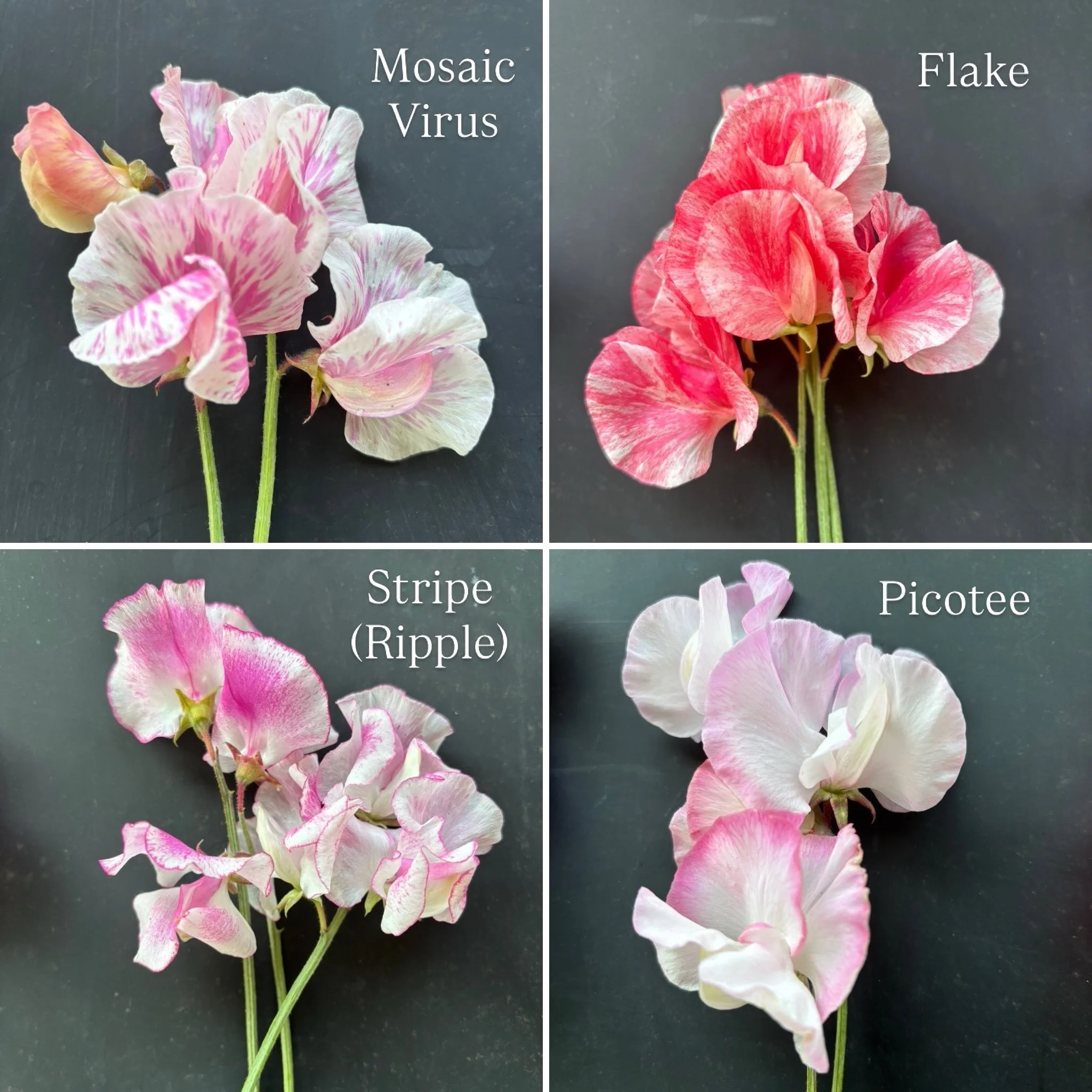
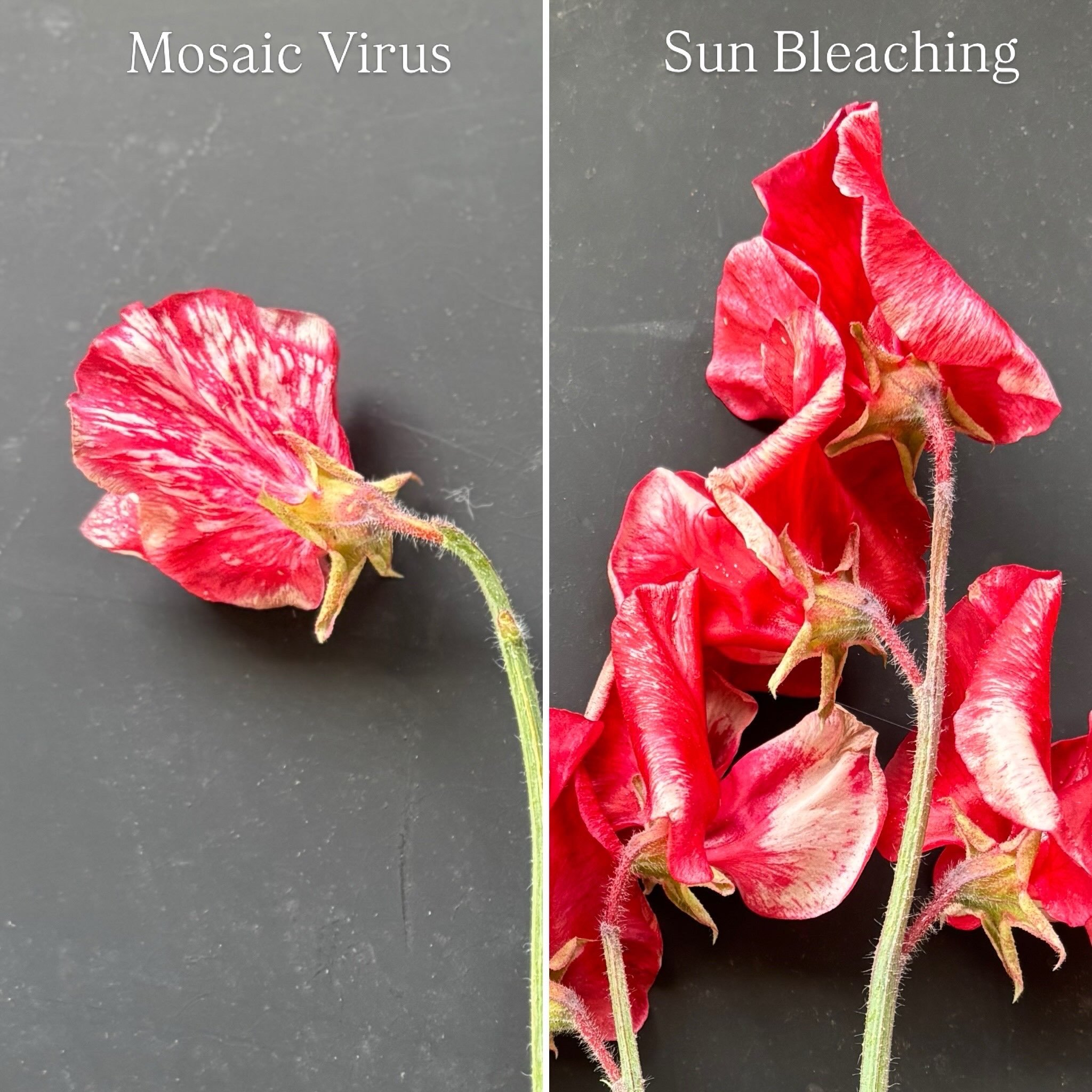
Including a quick side by side visual to distinguish the markings of Mosaic, or standard Flake, Stripe (Ripple) or Picotee in sweet peas.
If you are a dahlia grower like me (that was my first flower love), Mosaic is a bit of a 4 letter word. But in sweet peas, take a breath, it’s not quite the same.
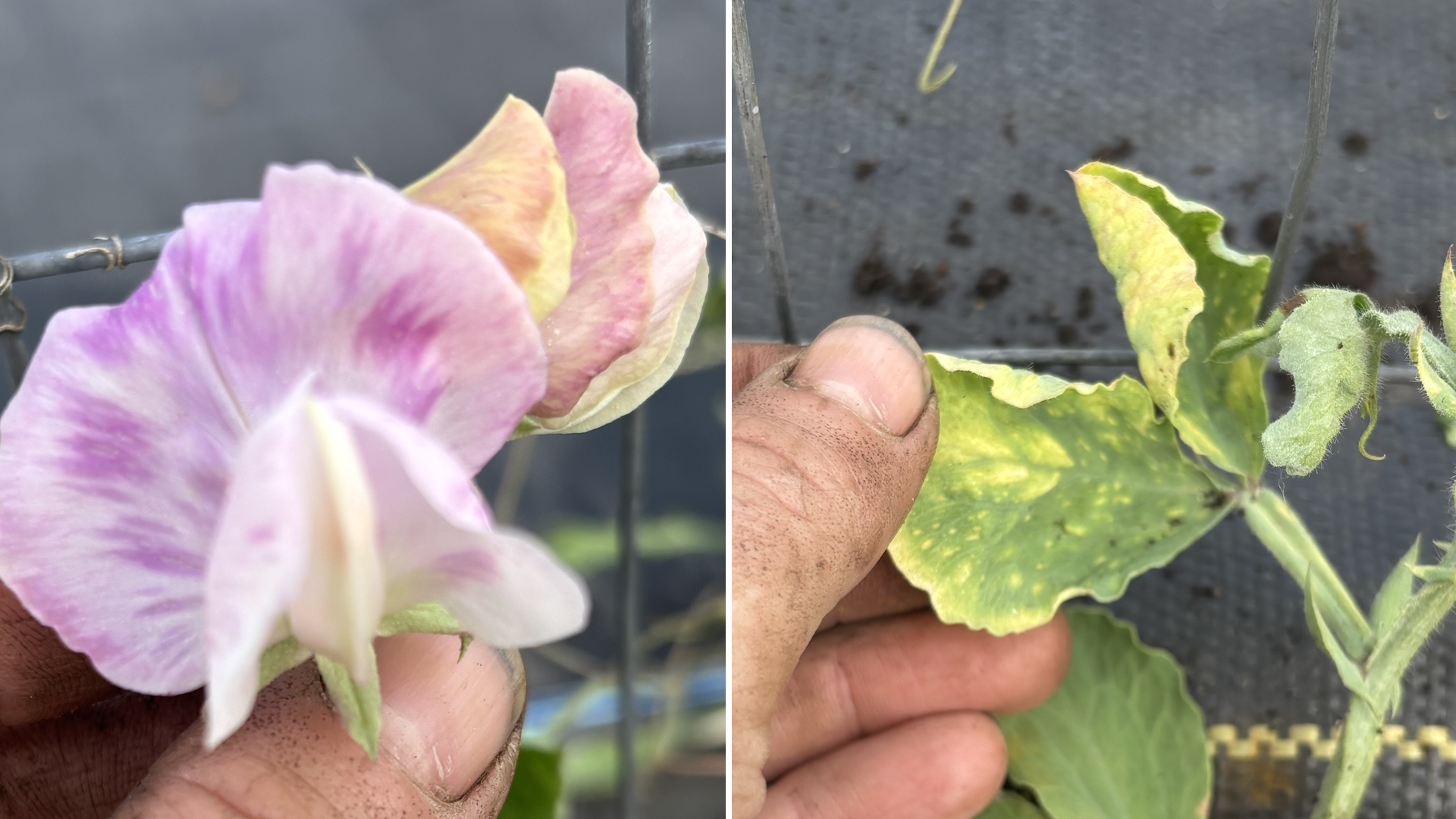
Mosaic splotching in blooms and leaves.
According to RHS, who are way more knowledgeable than I am, the four strains of Mosaic that are common in sweet peas are:
Pea enation mosaic virus (PEMV)
Bean yellow mosaic virus (BYMB)
Pea mosaic virus (PMV)
White clover mosaic virus (WCMV)
In my field, there is white clover, so while I haven’t tested it, I’m pretty sure WCMV is the mosaic the aphids are spreading to my sweet peas each season.
When sweet peas get mosaic, the two most common indicators are:
The leaves start to get splotchy and contoured (and eventually the blooms too), and the plant slowly turning to straw color. (If you want to save seed, remove those contoured blooms, there is a chance the keel was opened prior to pollination.)
The blooms start getting a splotcing pattern in one or more colors, often times in very cool unique coloring. This is not a cool new sweet pea, this coloring/pattern will not pass along to the seed.
The four above Mosaics do not pass on to the seeds. They do however slowly (sometimes quickly) kill your plants and spread across all your sweet peas.
Do you need to pull plants effected? That’s a personal choice, once its in your garden or field, chances are it’s already spreading. If I see a plant early in the season that is really struggling with mosaic, I pull it. In my field, typically by august, several plants show signs, but they are also wrapping up their season, and likely to make it to the end of the season just fine, so I leave them be.
There is one other type of mosaic, that it’s still a bit contested if sweet peas even contract, that’s Pea Seed-Borne Mosaic Virus. PSbMV is a mosaic that edible peas can get, it does pass on to the seed. From the conversations I’ve had with sweet pea seed growers, who have been at this for decades, they have never encountered it in their sweet peas. And while I’m not a research expert, so far I’ve only found one paper that list lathyrus as being a potential carrier for PSbMV, but I’ve not come across any documented cases of it - if you have, please share, I’d be very curious to learn more.